
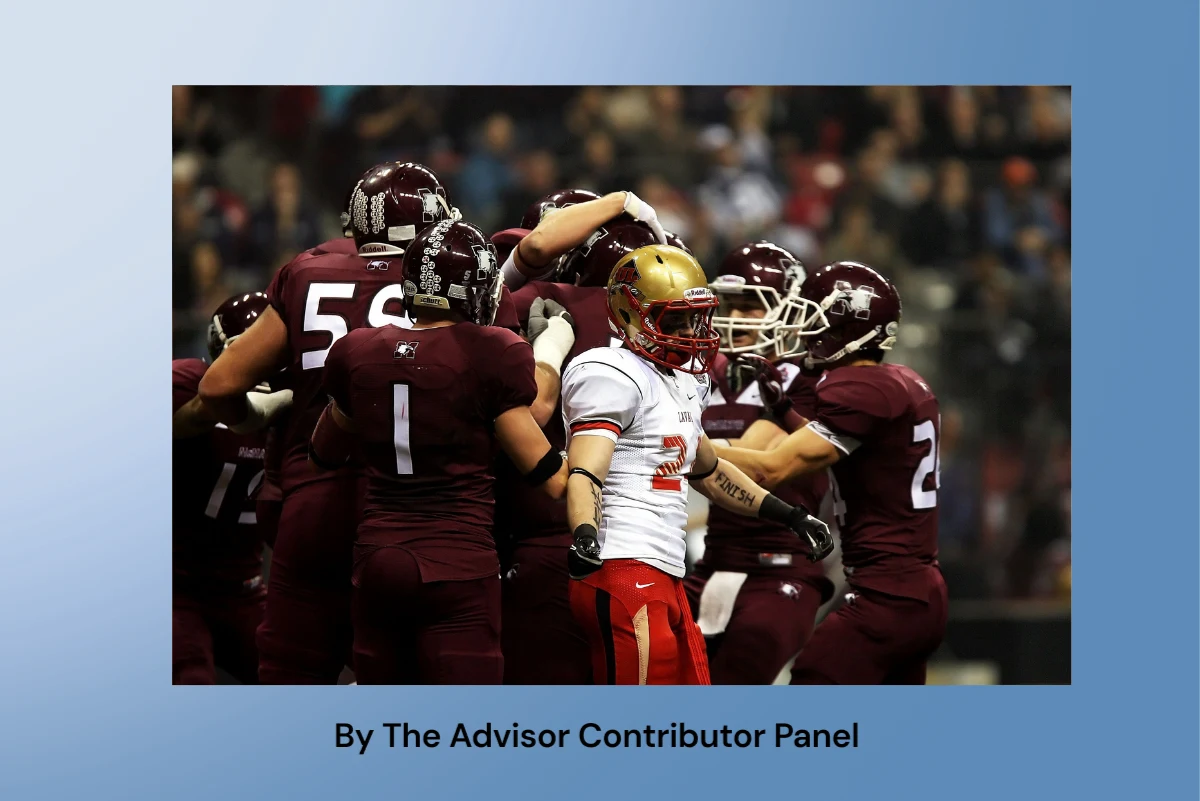
How Advisors Help Families Name Their Quarterback Before a Crisis Does
Football season energy is back, and every family already has that one person everyone calls. Advisors say an estate plan makes the quarterback role official.
By Fiona Solis
Community Ambassador, Trust & Will
Football season is back, which means Sundays glued to the game and group texts that somehow turn into logistics the second something goes sideways. Families already run their own version of that year-round.
Everybody’s got that one person. The sibling who keeps the spreadsheet. The spouse who knows the doctors’ names. The adult child who somehow always picks up when the family text thread turns into "where does mom keep the passwords?" at 11pm.
They’re already the family quarterback. Nobody voted them in. The job just landed.
So I asked the Trust & Will Financial Advisor Contributor Panel how they help families name that person on purpose—before a crisis does it for them.
The Accidental Family Quarterback
Lisa White Burns, Founder and Financial Wellness Coach at Her Path, LLC, has a name for the pattern: the accidental family quarterback—the person who didn’t raise a hand so much as answer one.
"I think almost every family has an 'accidental family quarterback,'" Lisa said. "The person who is the go-to in family situations or emergencies. But often that person was never 'officially' chosen. They just became the default because they lived closest, is the most organized, is perceived to be 'good at this stuff', or simply the one who actually answers the phone."
Her counsel is straightforward: Talk about it before you need it. Agree not only on who would be best to step in, but on whether that person is willing and able to take the role on. "Because the worst time to figure out who is supposed to take the lead is in the middle of a crisis."
On the September Contributor Panel call, Lisa shared how she chose close friends—not next of kin—as guardians for her children, so the kids could stay in their school district and with people who shared her parenting values. The point for clients is autonomy. You get to choose the people who fit the life you want protected—not only the relative who lives closest.
Who Gets The Call Anyway?
Bob Chitrathorn, CFP®, CPFA®, Co-Founder and CFO of Simplified Wealth Management, finds that most families already know who that one person is.
"So one of the questions I like to ask is: 'Who is the person everyone is going to call anyways?'" Bob said. "That usually gets us to the real answer pretty quickly."
Then he pushes the next question: Is that person actually the right fit for every role? Being organized doesn’t automatically mean someone should make healthcare decisions. Being sharp with money doesn’t necessarily mean they’re the best person to manage family dynamics. He has watched families get into trouble when they choose someone simply because they are the oldest child, live the closest, or because naming everyone equally feels fair.
His line that stuck: "In a crisis, fairness matters a lot less than clarity."
Bob steers families toward fit, willingness, and authority. Who is good at the job? Who is actually willing to do it? And have you given them the legal authority and information they’ll need when the moment comes? Knowing your quarterback is step one. Putting them in the estate plan—with real authority—is what lets them act.
Agent, Trustee, Executor
David Wright Jr., Managing Principal of WrightWay Legacy Services, starts by pulling the roles apart instead of collapsing them into a single name: Agent. Trustee. Executor. Each one carries different responsibilities—and living nearby is a thin résumé for most of them.
When he talks Powers of Attorney, he often separates healthcare from financial.
For healthcare: Who is comfortable talking with doctors, understanding medical information, asking questions, and making decisions when emotions are high?
For financial matters: Who is responsible with money? Who stays organized? Who can manage decisions and follow through?
"Sometimes that is the same person. Sometimes it is not," David said. "That distinction is important because being the closest person to someone does not automatically make you the best person for every responsibility."
The same lens applies to trustees—those who can manage assets, follow trust instructions, communicate with beneficiaries, and stay consistent over time—and to executors, who need to stay organized, keep a clear head, and work through administration when necessary. Families often already have someone who naturally fills these roles. Estate planning’s job is to make those informal patterns intentional.
"Choosing someone because of their relationship to you and choosing someone because they are equipped for a particular responsibility are not always the same decision," David said.
Capability Over Proximity
On the September call, Ryan L. Goldschmitt, WMCP, Founder and Managing Director of Geminus Wealth Partners, echoed that split: break decision-making into medical, financial, and family matters rather than expecting one person to carry everything. Select appointees based on their ability to execute—not purely on who lives closest.
Al Faber, CFP®, Founder of DIWY Financial Planning, often opens with the "trusted contact" conversation and uses it as a bridge into broader estate planning. He also reminds clients that non-family members can serve in key roles when that is the better fit—as long as the appointment is documented.
Julie Gawarecki of Prestige Wealth Advisors has sat with clients who struggled to identify a proper executor or power of attorney at all. Part of her work is walking families through legal document hierarchies—because many clients incorrectly believe a Payable on Death designation supersedes a will or trust. Naming the quarterback only works if the estate plan around that name actually holds.
Design Beats Default
For Matthew Veland, Financial Planner with Prudential Advisors, the question hits close to home. His mom was “that person” for her family. Now Matthew is that person for his—the one everyone calls.
"From my perspective, it’s less about identifying 'that person' since the family already knows who they are," Matthew said. "It’s more about empowering that person through proper estate planning documentation."
As with most financial planning situations, he added, you either arrive at them by design—by your choice—or by default, by someone else’s.
Bob lands in the same place. The goal isn’t to predict every emergency. It’s to pull as many decisions as possible off the worst day. Somebody will eventually become the family quarterback. "It’s much better when that happens by design instead of by default."
Your clients already know who their family calls. Help them put that design in an estate plan—powers of attorney, healthcare directives, and the documents that turn an unofficial go-to into someone who can actually act.
Interested in partnering with Trust & Will to enhance your own clients’ estate planning needs? Learn more about how you can join over 20,000 financial advisors and firms who are delivering peace of mind to their clients by offering a comprehensive estate planning solution. Sign up for free today.
Trust & Will is an online service providing legal forms and information. We are not a law firm and we do not provide legal advice.
Last updated: September 30, 2026


Related Articles
View All Articles
Financial Advisors - 3 min read
Seven Days, Seven Advisors: Reviewing Estate Plans During Estate Planning Awareness Week

Financial Advisors - 5 min read
National Preparedness Month Forgot the Estate Plan Again

Financial Advisors - 4 min read