
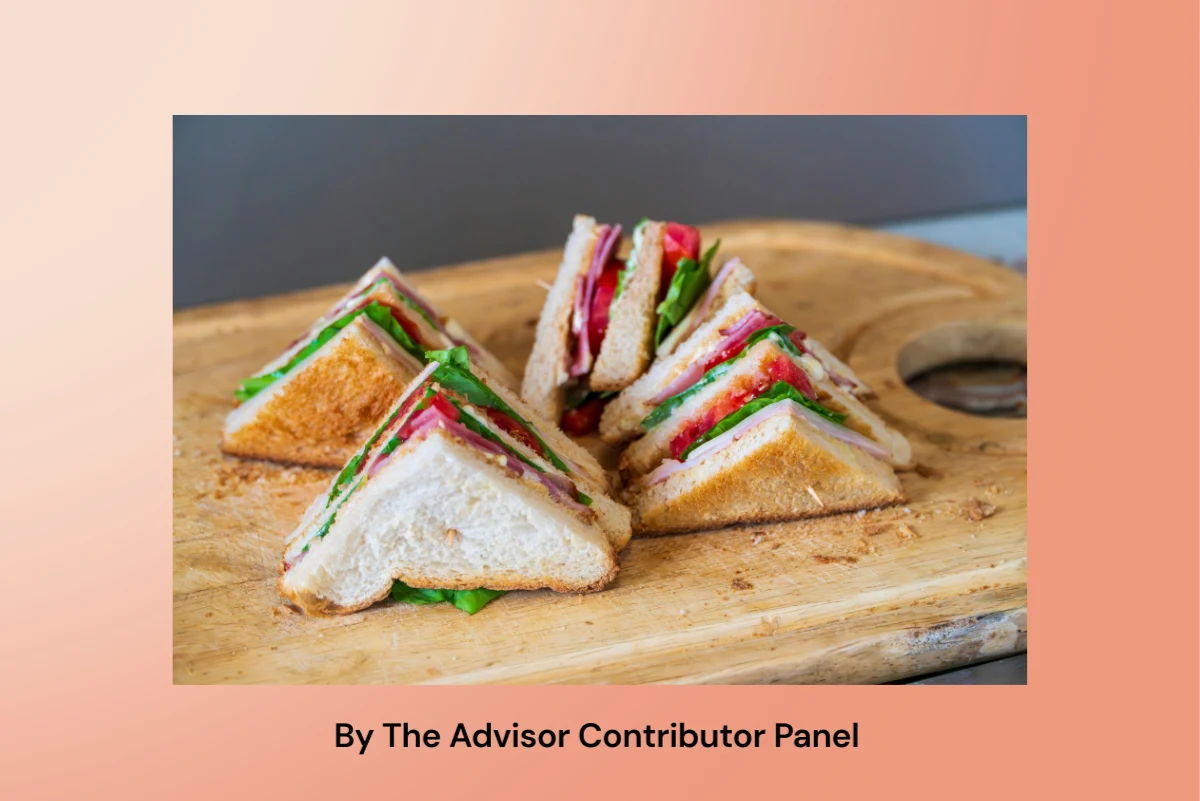
When You’re The Bread And The Filling: Estate Planning for the Sandwich Generation
Raising kids while caring for aging parents? Advisors help sandwich generation clients build estate plans to answer: who steps in, and how fast, if you can't?

By Fiona Solis
Community Ambassador, Trust & Will
There's a particular kind of exhaustion that comes from being needed in two directions at once.
You're helping your teenager figure out college applications. You're also fielding calls about your parent's medications. You're planning for the future your kids will inherit. And you're quietly trying to hold together the current reality your parents are navigating.
This is life in the sandwich generation—and it is increasingly the reality walking through advisors' doors.
So I asked the Trust & Will Financial Advisor Contributor Panel: How has that reality changed the estate planning conversations you're having? What does a good plan actually look like for someone who is planning in two directions at once?
What came back surprised me. It isn't really two directions…it's actually three.
You're The Bread…And The Filling
Bob Chitrathorn, CFP®, CPFA®, Co-Founder & CFO of Simplified Wealth Management, put it plainly: "More clients aren't just planning for the future—they're actively supporting it in two directions at once. Really, it's three directions: themselves, those younger, and those older."
That distinction matters more than it might initially seem. When you're responsible for dependent children and aging parents simultaneously, your estate plan isn't linear anymore. It's layered. Interconnected. And, as Bob described it, often fragile in ways people don't initially see.
"Because that's what it is now—a system," he said. "If something goes wrong anywhere in that system, the whole thing feels it."
Historically, estate planning centered on asset transfer: who gets what, and when. For the sandwich generation, that's no longer the first question. The first question is: who steps in, and how quickly, if you can't?
The Distance Problem
Decades ago, the logistics of caring for aging parents were difficult but local. Families lived near each other. If mom needed help, someone was close enough to help.
That's no longer the norm.
Matthew Ricks, CFP, founder of Haystack Financial Planning, knows this firsthand. His own family is spread across the East Coast—parents in Florida, one sister outside D.C., another outside Philadelphia, and Matthew himself on Long Island. It's a picture that looks familiar to a lot of his clients. "Decades ago, everyone was kind of centrally located," he said. "That's just not how families live anymore."
When families are spread across states, the questions get complicated fast. Who holds the medical power of attorney for mom or dad? Who has financial authority? If one sibling is geographically closest, do they have the legal standing to actually act—or do they have the desire but not the documents?
Al Faber, CFP®, Founder of DIWY Financial Planning has watched this uncertainty create real problems in practice: "[Clients often] don't know what medications their parents are taking, who the doctors are. When something happens, they don't know who to contact. And they don't live in the same area."
The estate plan can't close the physical distance. But it can close the legal and logistical gap—if it's built with that reality in mind.
The Question Of Who Steps Up
One of the most common assumptions families make is that the oldest child will naturally take the lead. In practice, it's rarely that simple.
"It's unique per family," Matthew noted. "Historically you'd assume the oldest child. But a lot of it naturally falls on whoever has the right combination of proximity, availability, and role."
Alan Gorlick, CEO of Gorlick Financial Strategies, learned this firsthand when his own mother passed. As both the oldest and the geographically closest, he naturally took the lead—coordinating arrangements, managing logistics, handling everything that needed handling. It felt straightforward, until his brother flew in for the funeral. That's when Alan's attorney pulled them both aside and suggested his brother sign a statement affirming that he trusted Alan's decisions. It was a simple document. His brother had no objections. But it was something Alan had never thought to put in place ahead of time.
"I didn't know there was such a statement," Alan shared. "And that could have been signed ahead of time."
What Alan's attorney was pointing to is sometimes called a sibling agreement or family care agreement—a document that attorneys are increasingly drafting for families navigating exactly this kind of situation.
It's a small but meaningful detail. A sibling agreement doesn't have to wait until there's a crisis. It can be formalized in advance—which means one less thing to navigate when emotions are already running high. And one less source of friction in a system that's already under pressure.
The Resource Squeeze
Being in the middle of the sandwich means being stretched—in time, in energy, and sometimes in finances. Often all three at once.
Charles Thomas III, CFP®, Founder of Intrepid Eagle Finance, works with a lot of clients living this reality. He also lives it himself—and one moment from last summer stays with him.
His oldest child was starting college. Orientation week: the kind of milestone a parent marks on the calendar months in advance. But that same week, a parent of Charles needed care—unexpectedly, urgently, and in a way that couldn't wait. Charles missed orientation. Not because he didn't care about his son, but because there was no one else there for his parents.
"This wasn't a problem money could fix," he said. "It required my time. My wife and I had to divide and conquer."
That moment captures something important: the sandwich generation squeeze isn't always about money. Sometimes it's just about being in two places at once—and not being able to. A good estate plan doesn't solve that. But it can reduce the number of logistical fires that compound the emotional ones.
The Fragmentation Problem
A plan that no one can navigate isn't a safety net—it's just paperwork.
Ryan L. Goldschmitt, WMCP, Founder of Geminus Wealth Partners, sees this distinction come up constantly with sandwich generation clients: "What I see most often is not a lack of planning—it is fragmentation. Too many accounts, too many logins, too many disconnected pieces when someone needs to step in."
The issue, as Ryan frames it, isn't whether a plan exists. It's whether anyone can actually use it in the moment that counts. A scattered financial picture—retirement accounts at old employers, life insurance policies no one has looked at in years, beneficiary designations that no longer reflect reality—can turn a well-intentioned estate plan into an obstacle course for the people trying to execute it.
His prescription is simple but often skipped: before you optimize, simplify. Start with a complete, organized inventory of everything—accounts, contacts, policies—so there's no confusion about who to call or what to do. For families already stretched across two generations of responsibility, that clarity isn't a nice-to-have. It's the foundation everything else rests on.
What The Plan Actually Needs To Do
For families navigating caregiving responsibilities for aging parents while also raising children at home, the estate plan has to work across all three directions Bob described: protecting the client, protecting their children, and helping coordinate care for their parents.
Bob outlined what that looks like in practice: guardianship built in layers, not just a single name; durable powers of attorney on both sides of the sandwich—for the client and their parents; a trust structured to provide liquidity across generations, not just pass assets; and roles that are clearly defined so that when priorities conflict, there's no confusion about who does what.
And perhaps most importantly—the plan has to be communicated. As Bob put it, a perfect plan that no one understands is a fragile plan.
Conversation Starters For Advisors
If you're working with clients who are in this season of life, here are a few ways to open the conversation:
"Do you know where your parents' legal documents are—and do you have the authority to act on them if something happened tomorrow?"
"If you were suddenly unavailable for a week—traveling, hospitalized, or simply overwhelmed—who would manage things on both ends?"
"Have you and your siblings ever had a real conversation about who's responsible for what when it comes to your parents' care?"
"Your plan protects your kids. Does it also account for what happens if your parents need you in a way that changes your finances or your time?"
"If your role as a caregiver to your parents intensified tomorrow, would your own estate plan still hold up?"
The answers often reveal how much is unaddressed—not because clients don't care, but because they haven't had the space to think it through.
Planning in Three Directions
The sandwich generation isn't a niche. It's a phase that a growing number of families are moving through—often quietly, often without the legal and logistical infrastructure to do it well.
Estate planning can't resolve the emotional complexity of caring for aging parents while raising children. But it can make sure that the right people have authority, that documents reflect current reality, and that a family doesn't have to figure out the legal details in the middle of a crisis.
As Bob put it: "The goal is not necessarily perfection, but resilience—with guidance. The right plan [and advisor] knows that and prepares for it."
That's what planning in three directions looks like. Not just a document. A system—built to hold.
Interested in partnering with Trust & Will to enhance your own clients’ estate planning needs? Learn more about how you can join over 20,000 financial advisors and firms who are delivering peace of mind to their clients by offering a comprehensive estate planning solution. Schedule a free demo today.
Trust & Will is an online service providing legal forms and information. We are not a law firm and we do not provide legal advice.
Last updated: May 1, 2026


Related Articles
View All Articles
Financial Advisors - 3 min read
Seven Days, Seven Advisors: Reviewing Estate Plans During Estate Planning Awareness Week
Financial Advisors - 4 min read
How Advisors Help Families Name Their Quarterback Before a Crisis Does
Financial Advisors - 5 min read