Why Trust & Will Is Committing to Poppy
Trust & Will is committing to Poppy, the Personal Agent Protocol. CTO Bill Parker explains the five rules that keep people, privacy, and accountability at the center of estate planning AI.

By Bill Parker
Chief Technology Officer, Trust & Will
People tell their AI things they haven't told their family. We're expecting. My dad is sick. I don't want my sister raising my kids. Every one of those is a reason to make or update an estate plan. Most people will say it to their AI before they ever search for a will.
That's changing fast. Personal agents are starting to sign in and make changes for people already. In estate planning, that means an agent touching who raises your kids and who gets what.
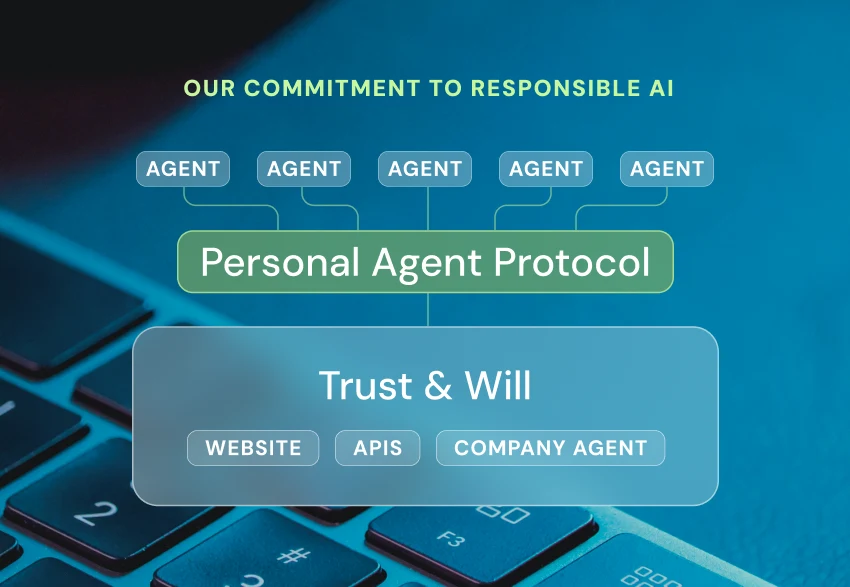
That's why we're committing to Poppy. A commitment to responsible AI principles that put people, privacy, transparency, and accountability at the center of how we innovate.
Poppy in one line
Poppy, short for Personal Agent Protocol, is an open standard from Sierra. It lets a personal AI agent tell a company who it is and act for a customer with only the access that customer approved.
Why we’re backing it
I've built customer platforms for years, including Möbius, a CRM and marketing ops platform at Quicken Loans. What I learned there is that if you bolt on identity and permissions after the fact, you spend years cleaning that mess up in everything you build on top of it.
Poppy builds that in from the start. The customer decides what their agent can access, and the company decides what the agent can do. The agent always identifies itself and signs in through OAuth with a token limited to what the customer approved.
That's how we already build at Trust & Will, and it's the right model for something as personal as an estate plan.
The five rules we build by
Here's what each of our five rules looks like in the product today.
1. People first
AI should help people make their own decisions. Estate planning is personal, so our tools explain the options and leave the choices to the member.
When someone asks our AI who should raise their kids, it walks them through the question and the options, but it won't make suggestions. It never recommends an answer, and it reads back every choice and waits for confirmation before saving anything.
2. Privacy by design
Before any request reaches a public AI service, we strip or anonymize personal information like Social Security numbers and bank account details. Members don't have to remember what not to type.
When someone connects Trust & Will to their own AI, they sign in with us directly and decide what to share. We can't read their AI conversations, and they can disconnect anytime. Poppy makes that the rule for every company that adopts it.
3. Transparency and accountability
Ask our Estate Assistant to give you legal advice and it says plainly that it can't, it then points you to someone who can. We're also upfront that sign-in and payment open in a separate window, and documents still need to be signed.
Poppy covers the agent's side. An agent always identifies itself, so we know when we're working with one and who it's acting for.
4. Accuracy and reliability
An AI answer can often sound right, yet still be wrong for you. If it skips one thing, someone may think they've handled a problem they've only half addressed. So our AI has a hard rule. When the answer depends on someone's specific situation, it says 'I don't have enough information to answer that responsibly' and points them to a professional.
5. Responsible innovation
Pretending AI isn't happening doesn't help anyone, and neither does slapping a single generic chatbot onto everything. Someone planning their estate for the first time needs a completely different experience than an attorney reviewing client documents. That’s why we built dedicated agents for specific jobs. And it works well: 94% of Estate Assistant users report a positive experience in our in-app surveys. You don't have to choose between strict guardrails and a genuinely useful product. Our path forward is simple, build for the best member experience, test hard, measure everything, and keep iterating as the tech gets better.
From AI-enabled to AI-first
Adding a chatbot makes a product AI-enabled. AI-first means agents can do real work through secure, structured access. For us, that means someone can create a Will or Trust, or update their plan, using the agents they already have.
A quick look ahead: EstateMCP
Poppy governs authorization, covering who an agent represents and what it's permitted to do. The Model Context Protocol (MCP) handles the integrations. It gives AI agents a clean, open way to plug into internal tools and take action across external systems.
EstateMCP is our MCP server for estate planning. Picture someone telling their AI they just had a baby. Today, the best it can do is suggest they look into a will. With EstateMCP, it could explain why naming a guardian is important, walk them through what they'll need to decide, and take them to the plan that fits them best.
We get it, nobody wakes up excited to write a will. It comes up in the middle of something else, like when you move or a loved one gets sick, and we want to be there when it does. EstateMCP follows the exact same rules. People grant access, and the AI can only do what they've approved.
We've already submitted it to Meta's Muse, Anthropic, and OpenAI for consideration, and we'll have more to share on that soon.
Earning trust is how we win
New models and protocols show up every month. In a space this personal, moving fast isn't enough to win. People are only going to give access to companies they actually trust. Our Poppy commitment is how we earn that trust. We build for agents, and we let people decide the exact limits of what those agents can do on their behalf.
I don't measure innovation by how advanced our technology gets. I measure it by how much it actually helps people, and how many families we can protect.
Want more on how we approach AI today? Read Responsible AI in Estate Planning: What Every Family Should Know.
Last updated: November 19, 2026


Related Articles
View All Articles
News - 3 min min read
Trust & Will’s Tu Legado Campaign Wins Silver at the 2026 Anthem Awards

News - 10 min read
Trust & Will 2025 Estate Planning Report

News - 5 min read
Trust & Will Launches a Chartered Retail Trust Company, Becoming the First Digital Estate Planning Platform to Serve as a Regulated Corporate Fiduciary