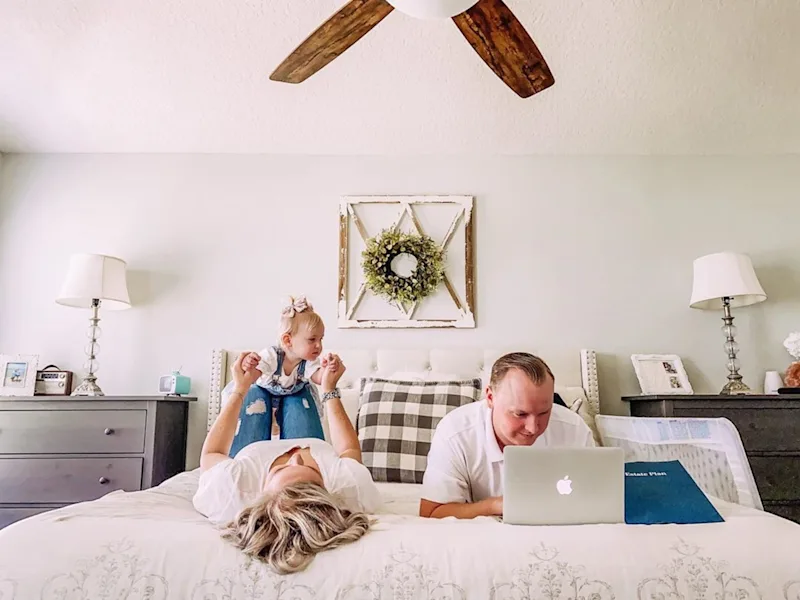

The Fastest & Cheapest Way to Transfer Your Home to Your Children
Without a trust, your family home could be tied up in probate for 24+ months. Learn how a living trust keeps your kids in their home and your wishes intact.

By Maya Powers
Estate Planning Content Expert, Trust & Will
Parents plan for everything. School districts, college savings, childproofed cabinets. But most never plan for what happens to the family home if something unexpected occurs.
Without a Trust, even a fully paid-off house can end up locked in probate court, leaving a judge to decide what happens next. That delay in legal ownership transfer can mean displacement, uncertainty, and legal costs that chip away at the very asset you worked so hard to build. In states like California, probate can cost $25,000+ for an estate worth $750k, a major cost your children might bear, which could be avoided altogether with a Trust. According to our 2026 Real Estate Inheritance Survey, only 11% of Americans have a trust, and nearly one-third have no estate plan at all. For families with minor children, that gap has real consequences.
The good news? One legal step, placing your home in a trust, can help protect your children, your home, and your family's future.
Why a Will Alone May Not Be Enough to Protect Your Home
Many parents assume that having a Last Will and Testament covers everything. And while a Will Plan is an essential starting point, a will on its own doesn't avoid probate.
When a home is passed through a will, it typically goes through the court-supervised probate process before your loved ones can take ownership. That process can take an average of 20 months to close and comes with legal fees, court costs, and public disclosure of your estate details.
For families with young children, this creates a painful gap between your intentions and what actually happens. A court may need to appoint a guardian, approve the transfer, and oversee the process, all while your children's living situation hangs in the balance.
How Probate Can Disrupt Your Children's Stability
Probate doesn't just cost money. It costs time — an average of 20 months in the state of California. And for a child, time without stability matters.
During probate, your home could be frozen as a court asset. Depending on the state, your children may not be able to continue living there without court approval. If there are debts, claims against the estate, or disputes among family members, the process can stretch even longer. In some cases, the home may need to be sold to settle the estate.
None of this reflects what most parents want. But without a plan that bypasses probate, it's what the legal system may require.
The True Cost of Probate
Probate expenses vary by state, but they add up quickly. The average cost of probate is $25,000 in legal fees, and in states like California, probate fees are set by statute and increase with the size of the estate. Beyond legal fees, families may also face court filing costs, appraisal fees, and executor compensation.
Every one of those costs comes directly out of the estate. That means less goes to your children and more goes to the process. For homeowners, the home is often the largest asset in the estate, which makes it the biggest target for probate-related expenses.
For a closer look at what probate could cost your family based on your specific state and home value, try our Probate Cost Calculator.
How a Trust Transfers Ownership Instantly and Privately
A Revocable Living Trust works differently. When you place your home into a trust, you transfer legal ownership to the trust while maintaining full control during your lifetime. You can still live in your home, sell it, refinance, or make changes. Nothing changes day to day.
But if something happens to you, the trust allows your chosen successor trustee to step in immediately, without probate, without court approval, and without public record. Your home transfers to your beneficiaries according to your instructions, on your timeline.
For parents, this means your children's living situation is protected from day one. There's no freeze, no waiting period, and no courtroom involved.
Setting the Rules: Age, Milestones, and Guardianship Alignment
One of the most powerful features of a trust is the ability to set conditions on when and how your children inherit. Rather than a lump transfer at age 18, you could structure distributions around milestones, like reaching a certain age, graduating from college, or purchasing their own home.
You can also align your Trust Plan with your guardianship preferences so the person you've chosen to care for your children has clear authority over the home they'll be living in. This eliminates confusion and helps your guardian focus on what matters most: taking care of your kids.
How to Start Protecting Your Home Today
If you own a home and have minor children, creating a trust isn't just a financial decision. It's a parenting one. Here's how to get started:
1. Talk as a family. Start the conversation early. If you have a partner, align on guardianship preferences, inheritance conditions, and who you'd want to manage the trust.
2. Choose the right plan. Our Trust Plan includes a Revocable Living Trust, a Last Will and Testament, Power of Attorney, Advance Health Care Directive, and more. It's everything you need for a comprehensive estate plan, built by attorneys and customized by you.
3. Create a free account. You can begin the process today at trustandwill.com. Our guided platform walks you through every step with clarity and care.
To get the full benefit and value of your trust, your property will need to be retitled in the name of the trust. We offer multiple options to help you transfer the title of your home through our Deed Transfer service.
If you have questions about how a trust interacts with your specific property or state laws, our Attorney Support service connects you with a vetted estate planning attorney for personalized guidance.
Your home is more than a building. It's where your kids feel safe, where bedtime routines happen, where life unfolds. Protecting it doesn't have to be complicated, but it does need to happen before it's too late.
Trust & Will makes estate planning simple so you can create a customized, state-specific plan from the comfort of your own home. Take our free quiz to discover which estate plan best fits your needs today, to secure your family’s future.
Is there a question here we didn’t answer? Browse more topics in our learn center, visit our Frequently Asked Questions (FAQ) page, or chat with our member support!
Are you a real estate professional? Learn more about partnering with Trust & Will to offer your clients a seamless way to protect their home from day one.
Trust & Will is an online service providing legal forms and information. We are not a law firm and we do not provide legal advice.
Last updated: March 20, 2026